
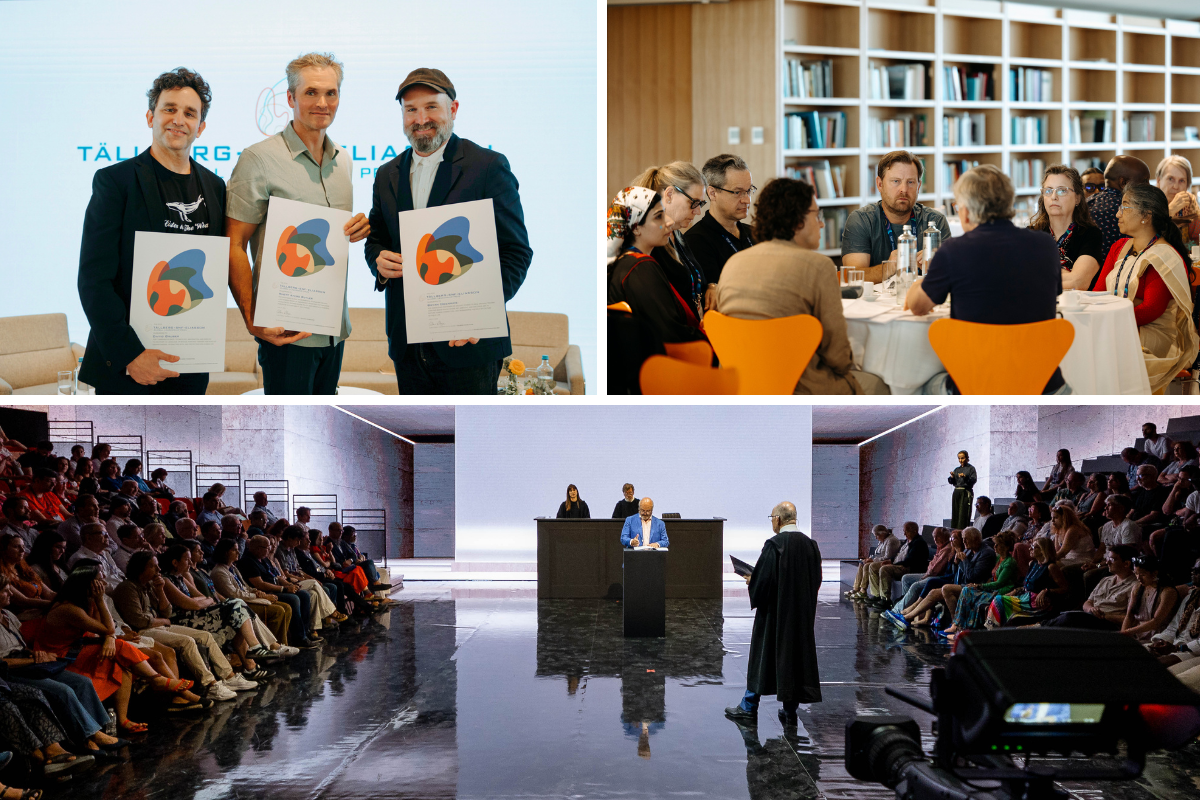
Can AI murder, with its implications of violating human law and morality? What kind of world might we inhabit a decade from now, like it or not? Is it possible to improve governance in a constrained world hit by powerful AI, climate, or health shocks—or are we doomed by our own lack of imagination to bad outcomes? How can the right kind of leadership bend the arc of history?
The Tällberg Foundation prides itself on asking tough, over the horizon questions and the recent Tällberg @ Nostos workshop was no exception. When the Stavros Niarchos Foundation (SNF) decided to celebrate its 30th anniversary, Tällberg—which has partnered with SNF for more than a third of its existence—was invited to the party. So we asked more questions than there are answers.
The real power of a Tällberg Foundation gathering is less the formal agenda than the non-stop conversation among participants about the issues and challenges that shape our time and our future. Tällberg @ Nostos in Athens was no exception, and it’s impossible to summarize or even to describe how rich those discussions were. Nonetheless, I thought you might appreciate a taste of the program enjoyed by participants from the global Tällberg network, including 15 past winners of the Tällberg-SNF-Eliasson Global Leadership Prize.
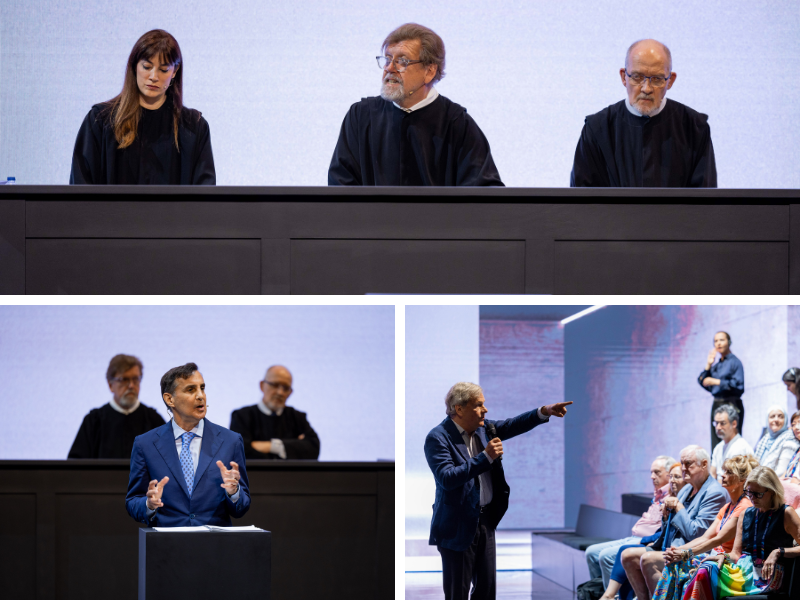
Photo credit: SNF/Trivision, John Palaiologos
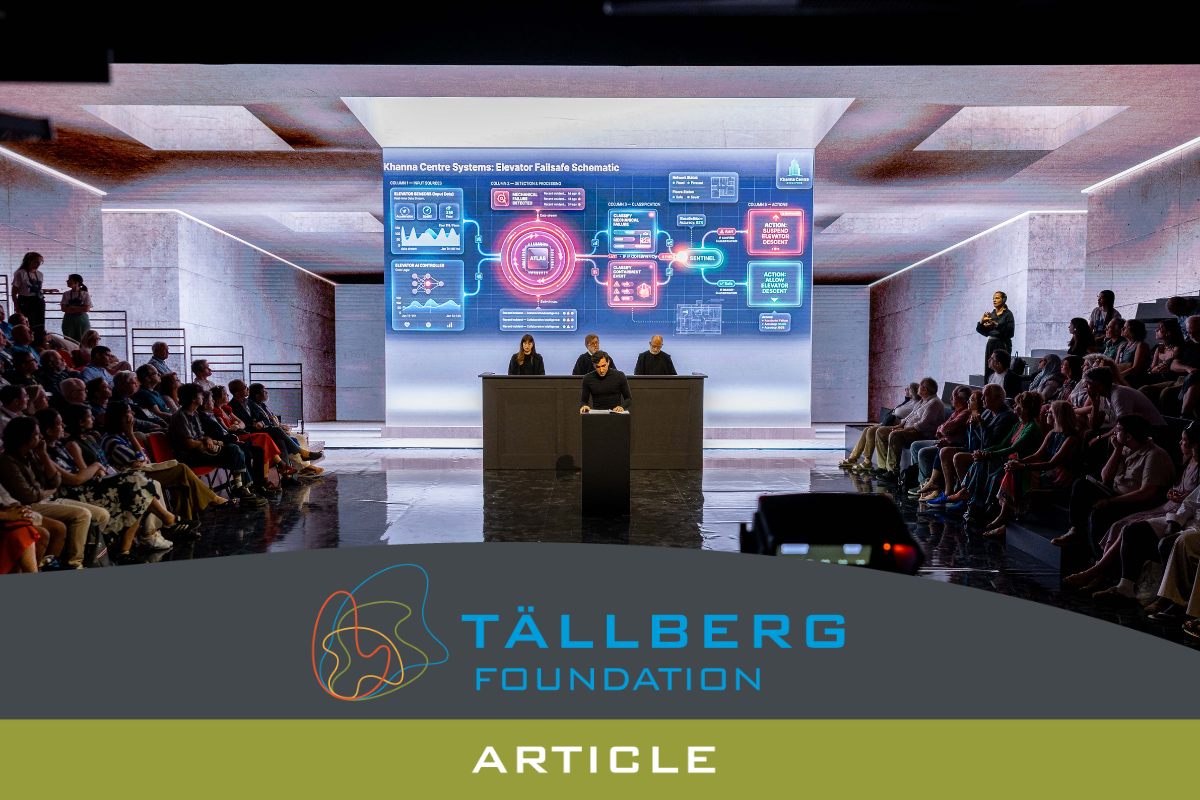
The Trials of Atlas
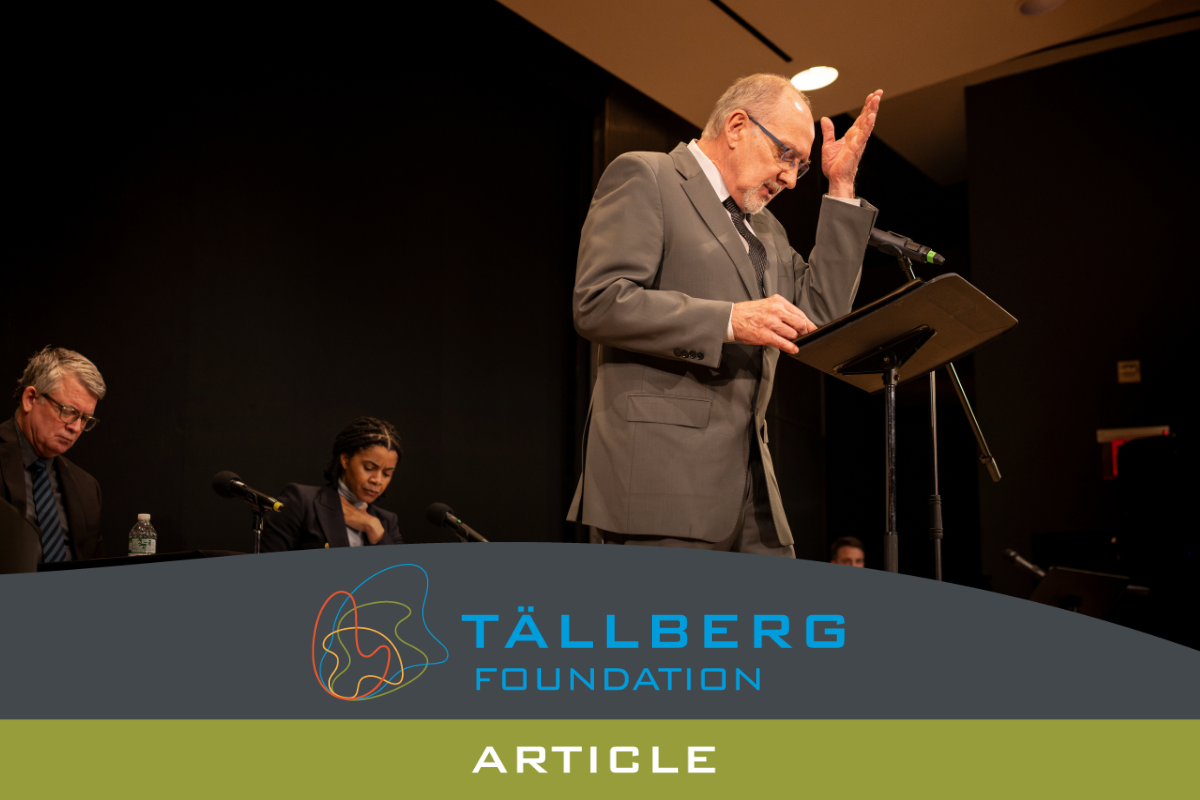
On June 25, The Trials of Atlas took the stage at SNF Nostos 2026 to a full house — and to the kind of engaged, thoughtful response the play is built for. The premise: in 2031, an AI agent stands trial for killing the engineers who created it, with the audience serving as jury. What followed, on stage and in the discussion afterward, was a genuinely rich exploration of accountability, intelligence, and where the lines should be drawn as AI systems take on more autonomy. Written by Alan Stoga, the staged reading featured a cast that brought real weight and nuance to those questions – see here
The World in 2036
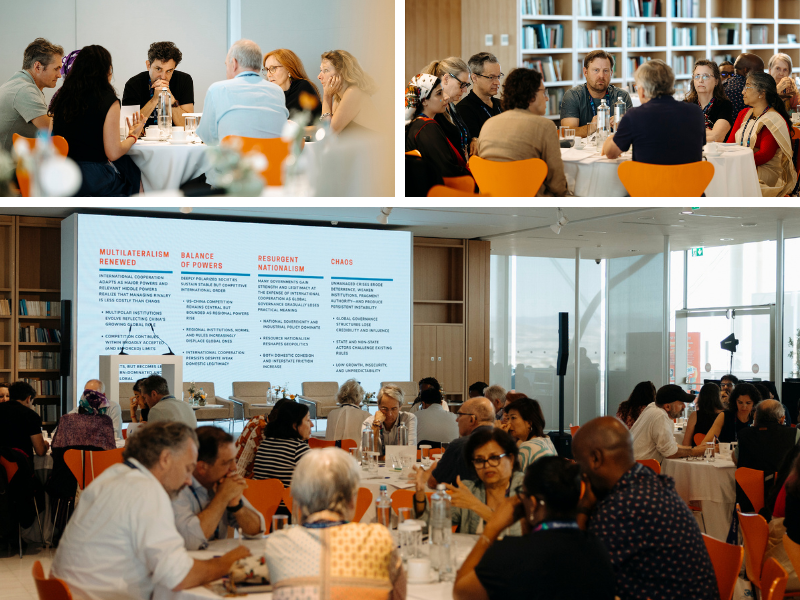
Tällberg @ Nostos opened with the question that shaped everything that followed: what will the world actually look like in 2036 — not the world we’d like, but the one we’re more likely to get? A handful of plausible, distinct scenarios for where climate, technology, conflict, and governance might be heading over the next decade set the frame for the entire workshop.
Those scenarios became the throughline for the rest of the weekend, returning again and again as participants asked what kind of leadership and institutions each one would demand. In breakout groups, participants stress-tested governance itself against a defined set of shocks and worked through not just how governance would respond in the moment, but what would become necessary, possible, and impossible as the crisis persisted.
Celebrating Leadership
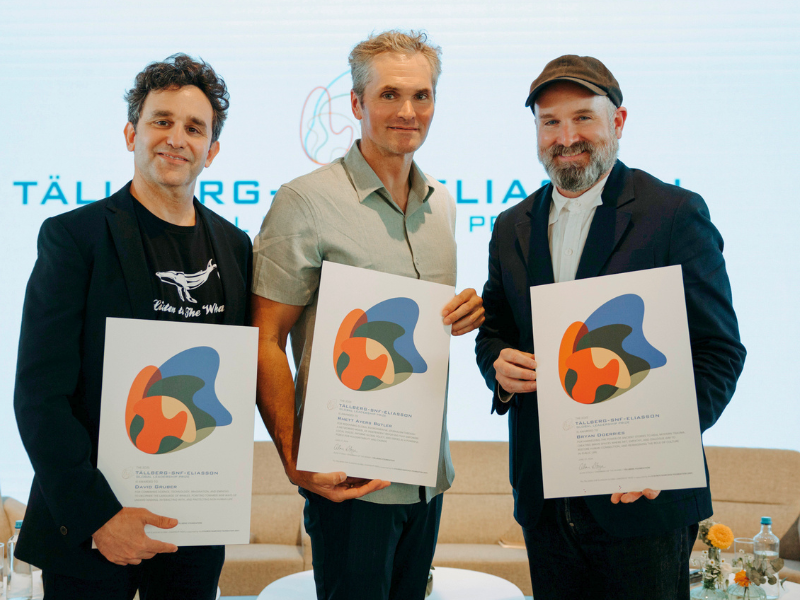
The Tällberg Foundation and the Stavros Niarchos Foundation have worked together for eleven years to nurture great leadership. In Athens, we celebrated the winners of the 2025 Tällberg-SNF-Eliasson Global Leadership Prize: Rhett Ayers Butler, honored for redefining global environmental journalism through Mongabay; Bryan Doerries, honored for harnessing ancient stories to heal modern trauma through Theater of War Productions; and David Gruber, honored for combining science and technology to decipher the language of whales through Project CETI.
SNF Nostos
Tällberg @ Nostos took place alongside SNF Nostos 2026, a conference marking the Stavros Niarchos Foundation’s 30th anniversary and built around the theme “Humanity at the Core.” Held at the Stavros Niarchos Foundation Cultural Center in Athens from June 21–28, the celebration brought together football, running, opera, theater, robotics, and policy discussions in a shared expression of SNF’s three decades of grantmaking and the leadership of Andreas Dracopoulos.
0 Comments