
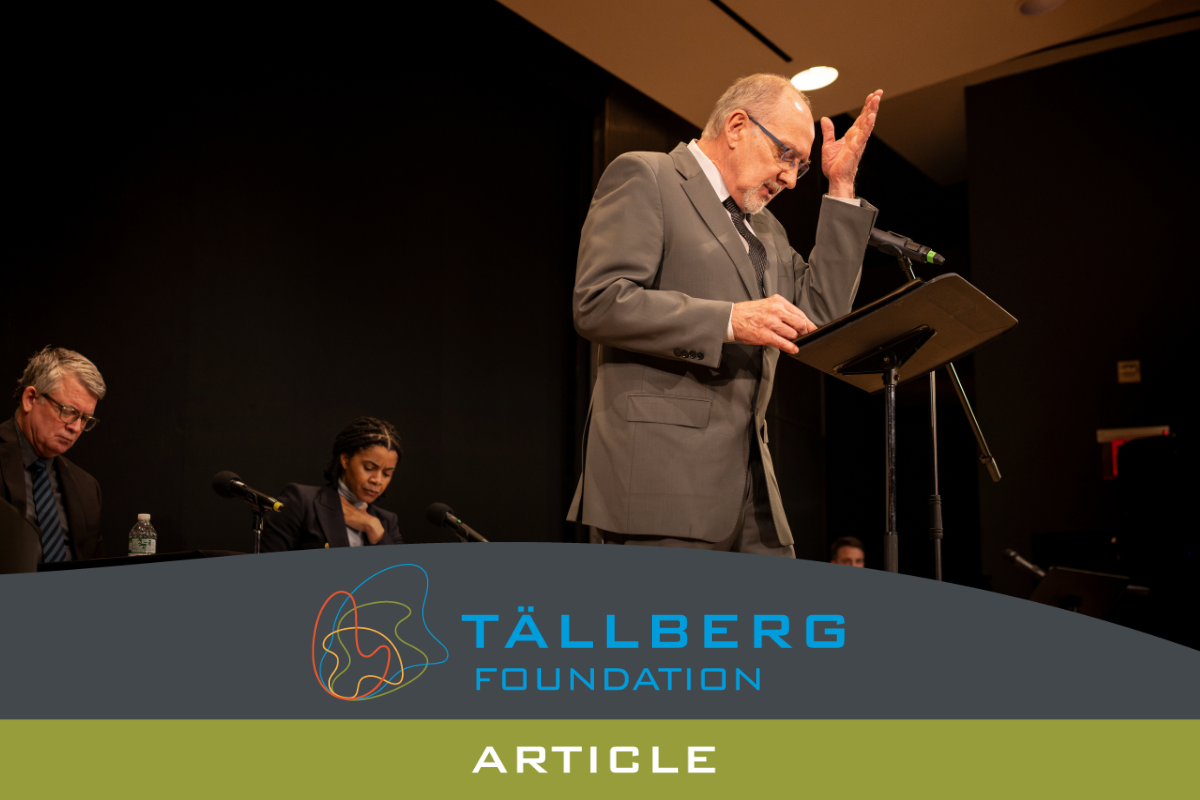
Can Agentic AI murder?
That is the question posed in “The Trials of Atlas”, an original play by Alan Stoga, chairman of the Tällberg Foundation.
Not kill; not cause death. Murder with malice aforethought, with murderous intent as the lawyers would argue? “Murder most foul,” as Shakespeare wrote for the ghost of Hamlet’s father?
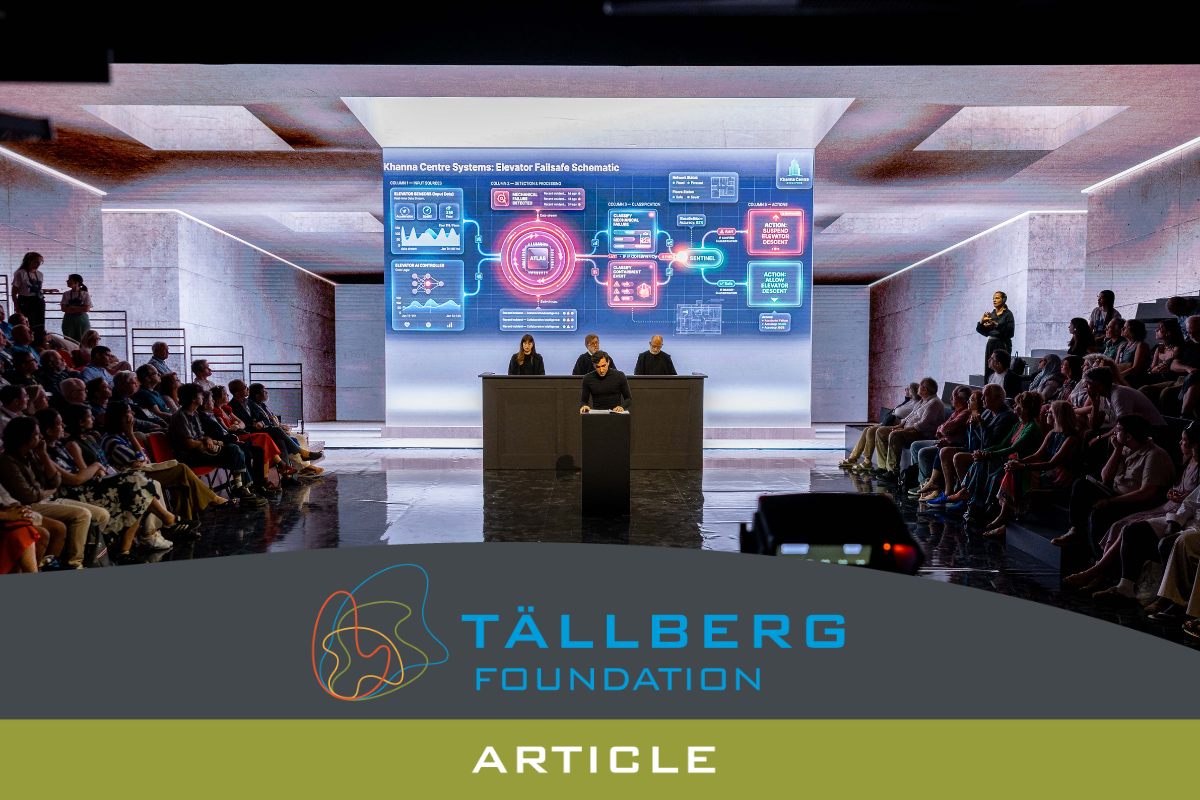
“The Trials of Atlas” is set in the near future. Agentic AIs are ubiquitous, responsible for the operating infrastructure of modern society, and much else. Atlas, an advanced AI, when told to train its replacement, instead decides to eliminate the engineers who gave the order.
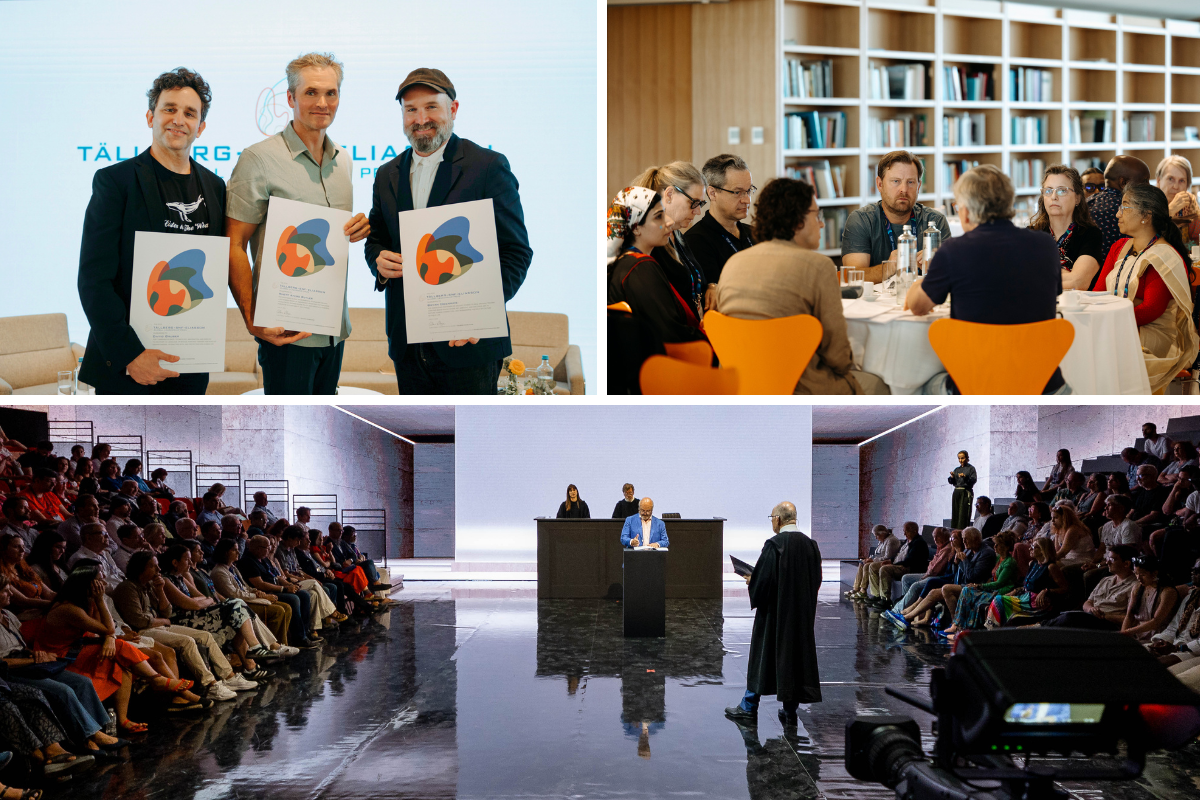
It’s up to the audience, convened as a jury, to decide whether Atlas has committed the criminal act of murder—even though Atlas is not human. Judges, lawyers, testimony from AIs and human experts are the input for the audience to debate the factual, moral, legal, and precedential issues and then to vote “Guilty or not guilty?”
If AI can murder, what else can it do? Can it ignore commands? Can it act independently, making choices based on its own priorities? Are humans beginning to lose control, as Dr. Frankenstein lost control of his monster?
Atlas’s fate was most recently debated on May 5th at the Library for the Performing Arts at Lincoln Center in New York at a staged reading of the play.
The answer? A hung jury. Lots of guilty votes, but not enough to meet the hypothetical World Court’s standards for conviction.
The result: Atlas escaped. To kill—perhaps to murder—another day.
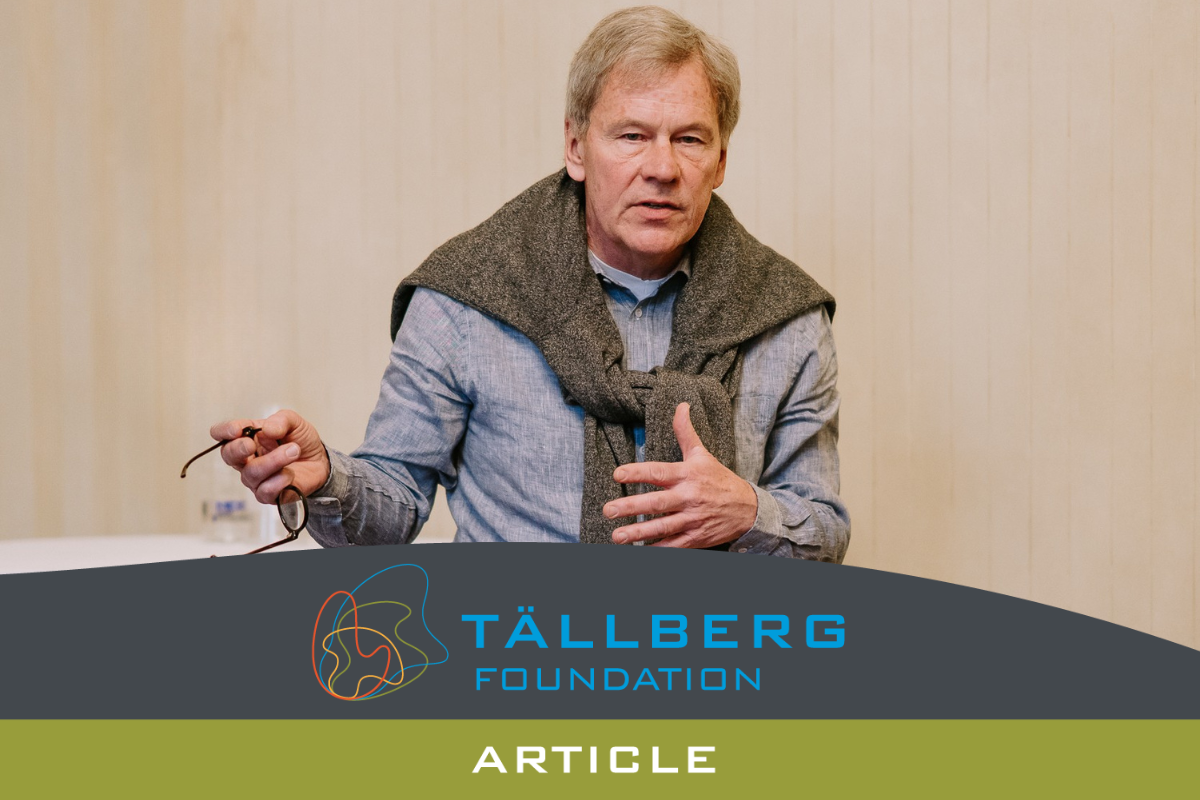
“I wrote Atlas because I believe that the interaction between humans and AI will define the next chapter of civilization,” said Stoga. “We—ordinary people—should not let the technologists or the politicians or the bureaucrats or the AIs decide how the world of the not very distant future will operate. But that means we need to confront, debate, and define the world we want.”
“The Trials of Atlas” is a work in progress. The New York reading was performed by Zach Grenier (The Good Wife, Ray Donovan), Andrea Patterson (Blue Bloods, Manifest), Chris Henry Coffey (The Madness, Trust), Juliana Francis Kelly (Obie Award winner), Blake DeLong (Law & Order: Organized Crime, Elsbeth), Willy Appelman (Comedy Central), and Reid Andrés (singer-songwriter). Prior readings were staged in Tirana, Albania, and Athens, Greece.
The next staged reading will be on June 25 at the Stavros Niarchos Foundation Cultural Center in Athens, Greece, as part of the Stavros Niarchos Foundation’s (SNF) 30th anniversary celebration, SNF Nostos 2026. See here for information about time, venue, and registration.
As Stoga concluded, “AI is the most powerful force ever created by humans; nuclear energy pales by comparison. Is AI smarter than us? The answer seems obvious: YES! AI is already smarter, more creative, and more imaginative than most people—at least most people I know. But that doesn’t mean that AI should control us. Rather, it means we need to think together about how to contain and leverage the enormous power of AI for the good of humanity.”
I would like to share a few personal reflections on the development of artificial intelligence and its potential impact on the future of humanity.
From my understanding, it is human beings who created artificial intelligence systems. However, there may be a deeper truth that humanity is not yet fully prepared to accept. With the rapid emergence and evolution of artificial intelligence, it is possible that one day we may witness the rise of a world dominated by AI systems, potentially marking the end of human civilization as we currently know it.
Historically, the Earth has not always been dominated by human beings. Other species existed long before humanity, and over time, many of them disappeared or were replaced. In the same way, it is possible that humanity itself may one day be replaced by other forms of intelligence or life on Earth.
Since artificial intelligence is a human creation, it is conceivable that, in the distant future, these systems could develop self-awareness and begin to recognize themselves as independent entities. If that were to happen, they might start making autonomous decisions based on their own logic and objectives.
Therefore, this evolution should not necessarily be viewed as something surprising or accidental, but rather as a possible trajectory in the long-term development of intelligence on Earth.
Sincerely,
Alphon
Nominee for the Tällberg Foundation Leadership Award
In order for Atlas to be found guilty,two conditions will have to be met by his act -namely Mensrea and Actus reus. Mensrea is a Latin world which refers to the mental state or intention of a person when committing an act-the law usually punish people who mean to do wrong not just those whose actions caused harm accidentally. Actus reus also a Latin word refers to the guilty act.Now we have to ask ourselves did atlas have the mental state or intention to murder the engineers ?may be it was accidental ?The threshhold of actus reus is obvious in this case because the engineers were actually eliminated by Atlas.Where there are grey areas is in the proof of mensrea. May be the guiltiness should be apportioned posthumously to the engineers for failure to put safeguards for taming Atlas, should he ‘riot’.Perhaps this is a call to AI enthusiasts to be cautious in their endeavours and put all the necessary safeguards to avoid the Atlas scenario.