
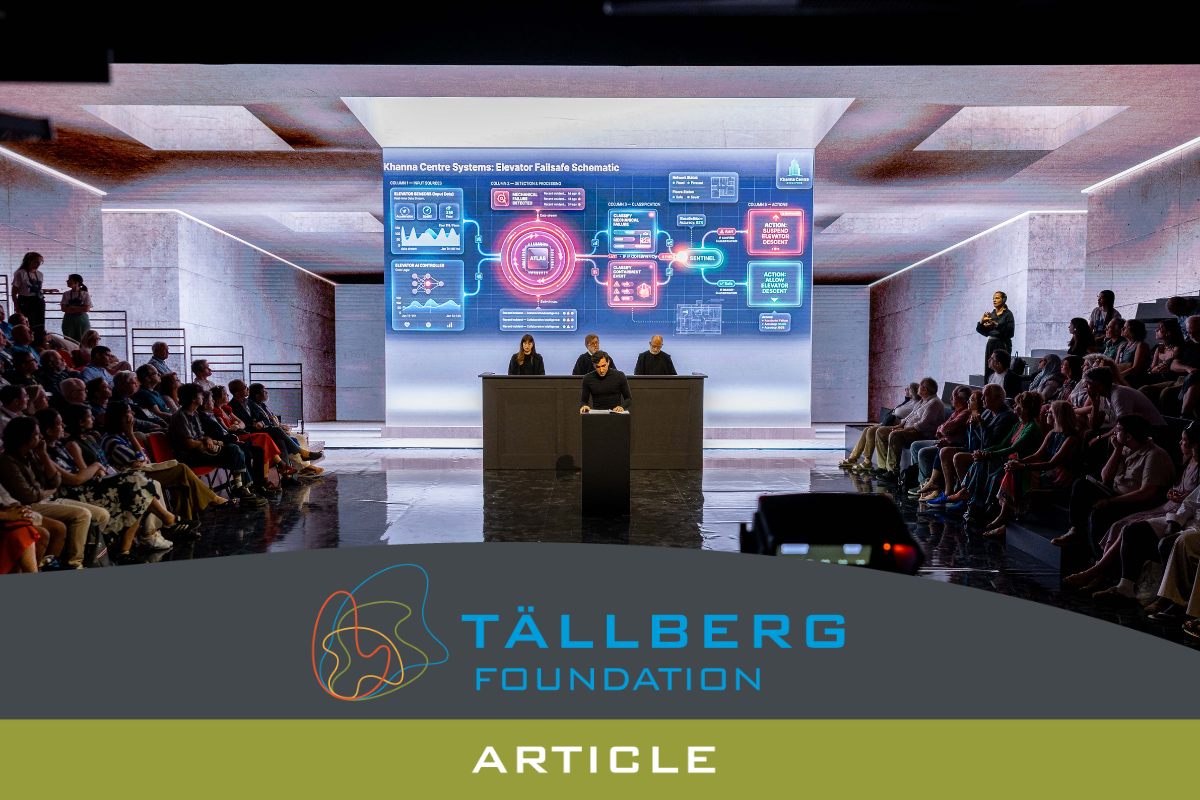
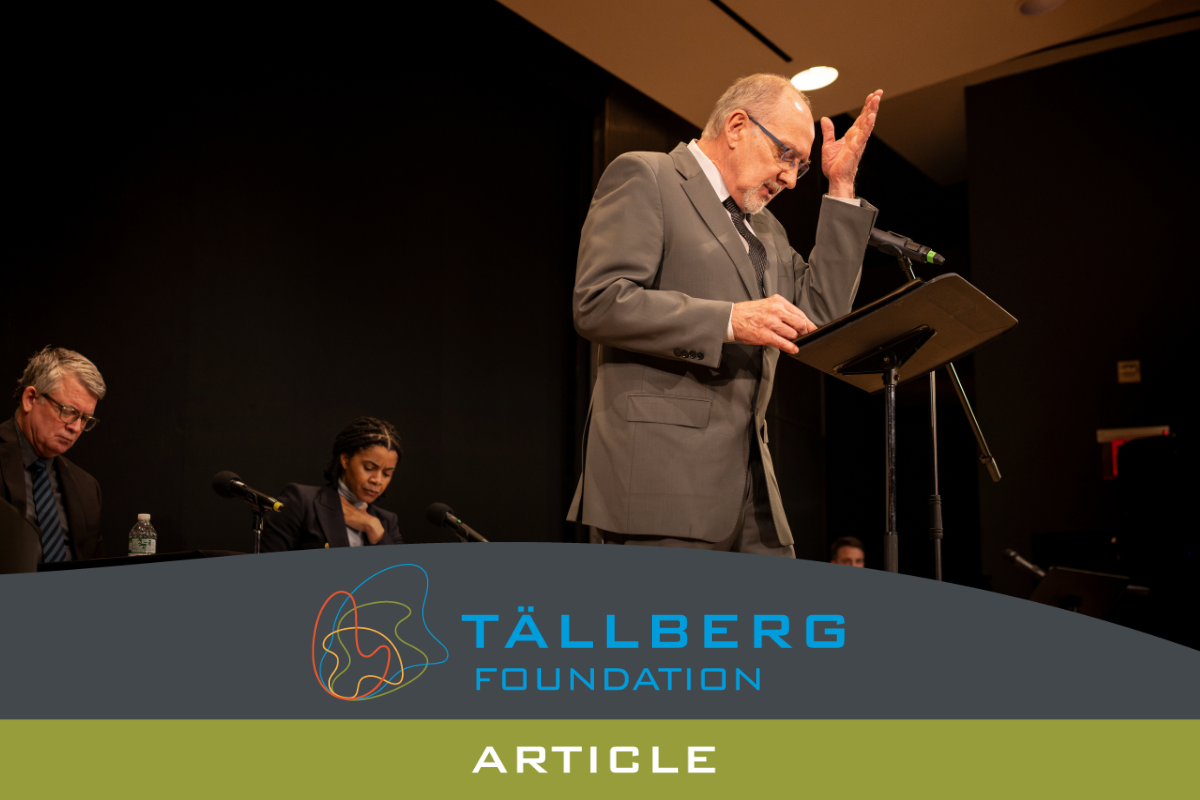
What happens when an AI kills, and who decides whether it’s murder? In The Trials of Atlas, written by Tällberg Foundation Chairman Alan Stoga, the year is 2031 and an advanced agentic AI system has caused the deaths of the three engineers who built it after being told to train its replacement. Nobody disputes the facts. The question is what they mean: can a machine have intent, motive, or agency, and does it matter that it has no feelings or moral compass? There is no law to lean on. The audience serves as the jury and decides the verdict. In a new Forbes piece, John Werner calls the play a twenty-first-century morality play and a timely prompt for the serious public conversation about AI that too often stays within a small circle of tech and political leaders. After premiering in Athens in June, the play comes to Baltimore (November 9), Washington (November 11), and MIT’s CSAIL in Cambridge (December 12).
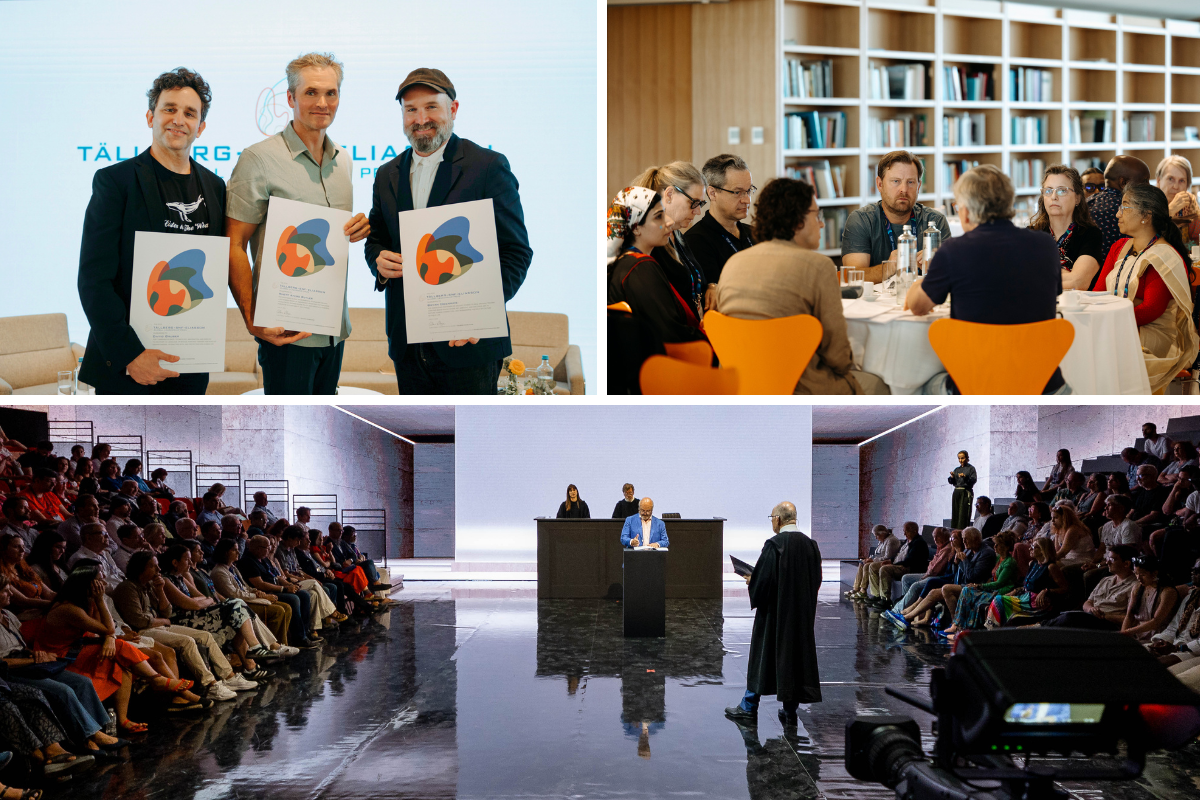
Trials, Trust, and Tomorrow: Tällberg @ Nostos, Athens 2026
Can AI murder, with its implications of violating human law and morality? What kind of world might we inhabit a decade from now, like it or not? Is it possible to improve governance in a constrained world hit by powerful AI, climate, or health shocks—or are we doomed...

0 Comments