
The number of active conflicts today is the highest since the end of World War II. The world has clearly entered a new, more violent, and fragmented era.
We can and should debate “why?” But we also need to focus on “so what?” What are the consequences, not only for warriors but also for the innocents caught up in spreading conflict? Is it possible that the impacts of traumatic violence could be transmitted across generations?
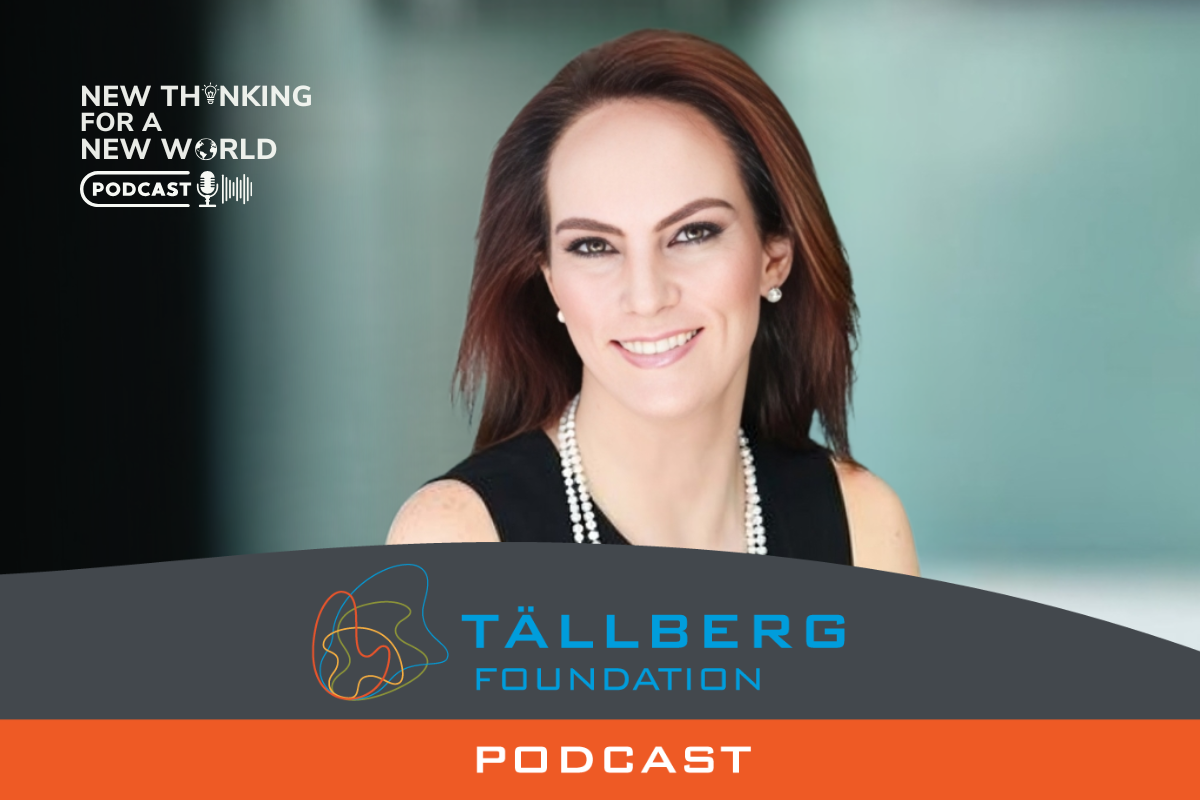
A group of scientists believes their work proves that war trauma can alter gene expression, thereby impacting the children and grandchildren of victims of war. Among the authors of a profoundly important scientific paper published last year was Rana Dajani, a Jordanian molecular biologist and long-time participant in the Tällberg network. Listen as she explains the science and its implications.
What do you think?
***
You can also find the New Thinking for a New World on your preferred platform, including Apple, Spotify, and YouTube.
ABOUT OUR GUEST
Rana Dajani is a professor of molecular biology at the Hashemite University in Jordan, specializing in epigenetics and biomarkers of trauma among refugees. A leading voice in scientific policy, she helped introduce national and regional stem cell laws and has served on numerous scientific boards and UN councils, most recently as President of the Society for the Advancement of Science and Technology in the Arab World. She has held visiting professorships at Harvard, Yale, MIT, the Jepson School of Leadership, and Cambridge, and is an ISC and TWAS fellow. A committed advocate for building indigenous research capacity and mentoring women scholars in STEM, her mentoring model has been recognized by the U.S. National Academy of Sciences.
Rana is also a social entrepreneur and global thought leader. She founded We Love Reading, a grassroots movement that cultivates changemakers by fostering a love of reading in underserved communities; the program has received the UNESCO International Literacy Prize and grown to more than 8,000 locally run libraries in over 70 countries. Her work has been recognized through Fulbright, Eisenhower, Robert Bosch, Ashoka, Yale Morse, and Yidan Global Fellowships, as well as the Jacobs Social Entrepreneur Award, the Nansen UNHCR Refugee Award, and the Schwab Social Entrepreneur Award. Her 2018 book Five Scarves: Doing the Impossible — If We Can Reverse Cell Fate, Why Can’t We Redefine Success?challenges global leaders to rethink inequities in education and employment and to redefine how we measure success in a rapidly changing world.


I agree with this research, something I even wrote about in my book titled “Herd Trauma”. Although I used the Ugandan context, I have come to realise that it cuts across demographies. Thank you once again for this research.