
For decades, environmentalists and climate scientists have warned about the catastrophic consequences of the shrinking and erosion of the Amazon and Congo rainforests. Politicians have echoed and amplified the warnings, but have done little of consequence to slow the actual pace at which the rainforests are moving towards tipping points.
The recent UN climate summit in Belem was supposed to change all that. However, it would take an unusually large dose of magical thinking to believe what happened at COP 30 will have much more impact than what happened at its twenty-nine predecessors, at least concerning the Amazon and Congo River Basins.
Maybe what’s needed is new thinking. Protecting the Amazon and the Congo isn’t just an environmental challenge but also a governance challenge, a justice challenge, and an economic development challenge. And stopping—or even slowing—the tipping probably requires bottom-up local action, not just top-down global declarations of intent.
To discuss potential new approaches, we gathered three people who have skin in the game: Dr. Gladys Kalema-Zikusoka, Ugandan wildlife veterinarian and founder of Conservation Through Public Health; Dr. Fernando Trujillo, Colombian marine biologist and world-leading expert on river dolphins; and Sam Muller, Dutch lawyer with extensive experience in global justice and environmental practices.
Listen as they explore how to define and execute new approaches to saving the rainforests.
***
This podcast episode is a recording of a live webinar and is also available to watch on YouTube for those who prefer a video format.
You can also find the New Thinking for a New World on your preferred platform, including Apple, Spotify, and YouTube.
ABOUT OUR GUESTS
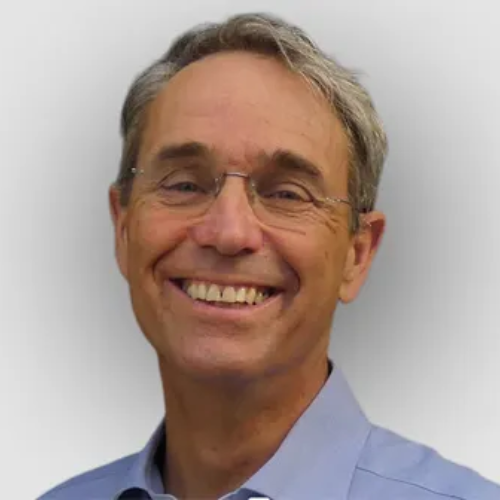 Sam Muller, Partner at Justice Compass Advisers; founding CEO of HiiL and the Wildlife Justice Commission; former Chair of WWF Netherlands.
A Dutch social entrepreneur and strategic adviser, Sam led the establishment of the International Criminal Court before founding HiiL and the Wildlife Justice Commission, both internationally recognized for advancing justice and conservation. He has advised governments, CEOs, and civil society leaders on governance reform, institutional transformation, and ESG strategy.
His contributions to justice and environmental protection earned him the 2022 Tällberg-SNF-Eliasson Global Leadership Prize and a Royal Decoration of the Netherlands (2024)
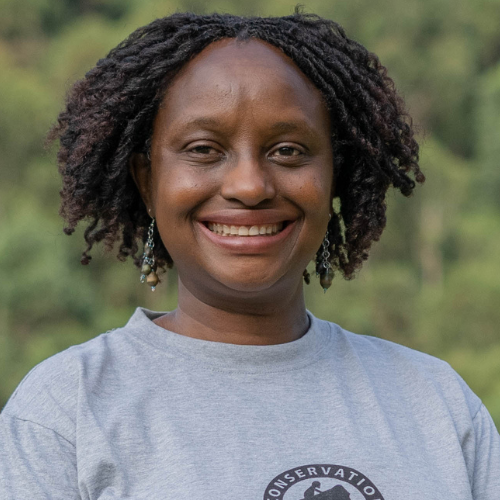 Dr. Gladys Kalema-Zikusoka is a Ugandan wildlife veterinarian and founder of two award-winning initiatives: Conservation Through Public Health, which promotes the coexistence of endangered mountain gorillas, other wildlife, and local communities; and Gorilla Conservation Coffee, a social enterprise that supports farmers living around gorilla habitats.
A pioneer of the One Health approach, she has led efforts to highlight the deep connections between human and wildlife wellbeing—work made especially urgent during the COVID-19 era. Her leadership and vision earned her the 2022 Tällberg-SNF-Eliasson Global Leadership Prize
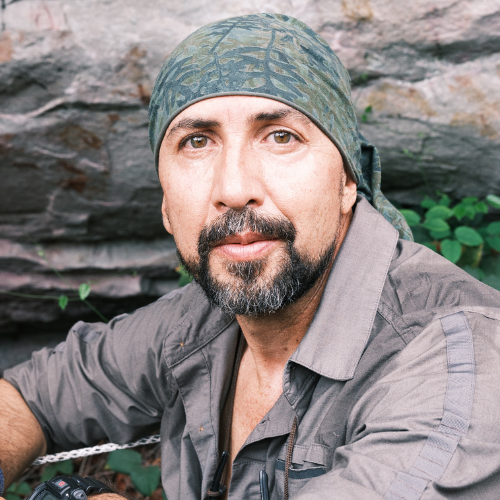 Dr. Fernando Trujillo is a Colombian marine biologist and world-renowned expert on river dolphins. With an MSc in Environmental Sciences and a PhD in Zoology, he chairs the Small Cetacean Subcommittee of the International Whaling Commission and serves on multiple IUCN specialist groups. A prolific researcher with more than 300 publications, he has led major expeditions and advanced conservation science across aquatic ecology, endangered species, wetlands, and protected areas.
His groundbreaking contributions to science and conservation have earned him numerous honors, including the 2024 Tällberg-SNF-Eliasson Global Leadership Prize.


We keep talking about tipping points as if the forests are failing us. The truth is harsher: humanity is failing love.
The Amazon and the Congo are not dying because we lack conferences, data, or warnings. They are dying because the world still chooses domination over relationship, profit over care, and control over reverence. Wars, killings, land grabs, and ecological destruction all come from the same root: a refusal to recognize life as sacred.
COP summits repeat the same mistake because they are built on the same absence—love is never operationalized. Without love, governance becomes coercion. Without love, economics becomes extraction. Without love, justice becomes selective. And without love, declarations become empty sounds while blood is spilled and forests burn.
Love ends wars because it makes exploitation impossible. You cannot bomb what you recognize as yourself. You cannot poison rivers when you feel them as your own bloodstream. You cannot kill defenders of the land when you see them as kin instead of obstacles.
Bottom-up action works only when it is love-led. Indigenous and local communities protect forests not because of policy, but because of relationship. They defend life with their bodies because love has already organized them where institutions have failed. What they need is not another framework, but protection, dignity, and the return of stolen power.
Saving the rainforests is not about new thinking alone—it is about a return to right feeling. Love is not sentimental; it is structural. It reorganizes economies, dissolves violence, and ends wars by removing the justification for harm.
Until love becomes the foundation of governance, justice, and development, the world will keep hosting summits while life keeps bleeding. And the forests will continue to tell the truth we refuse to live.